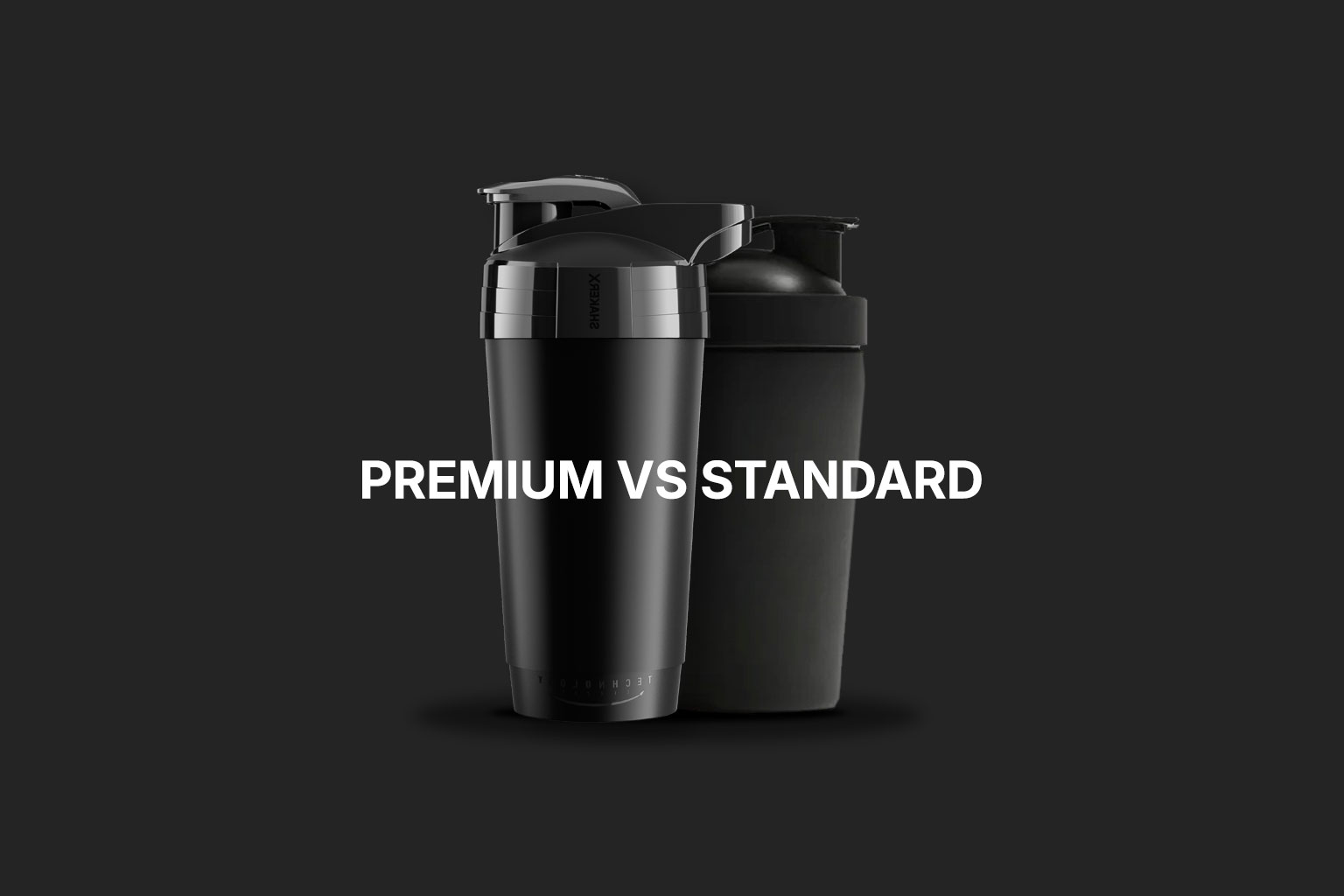
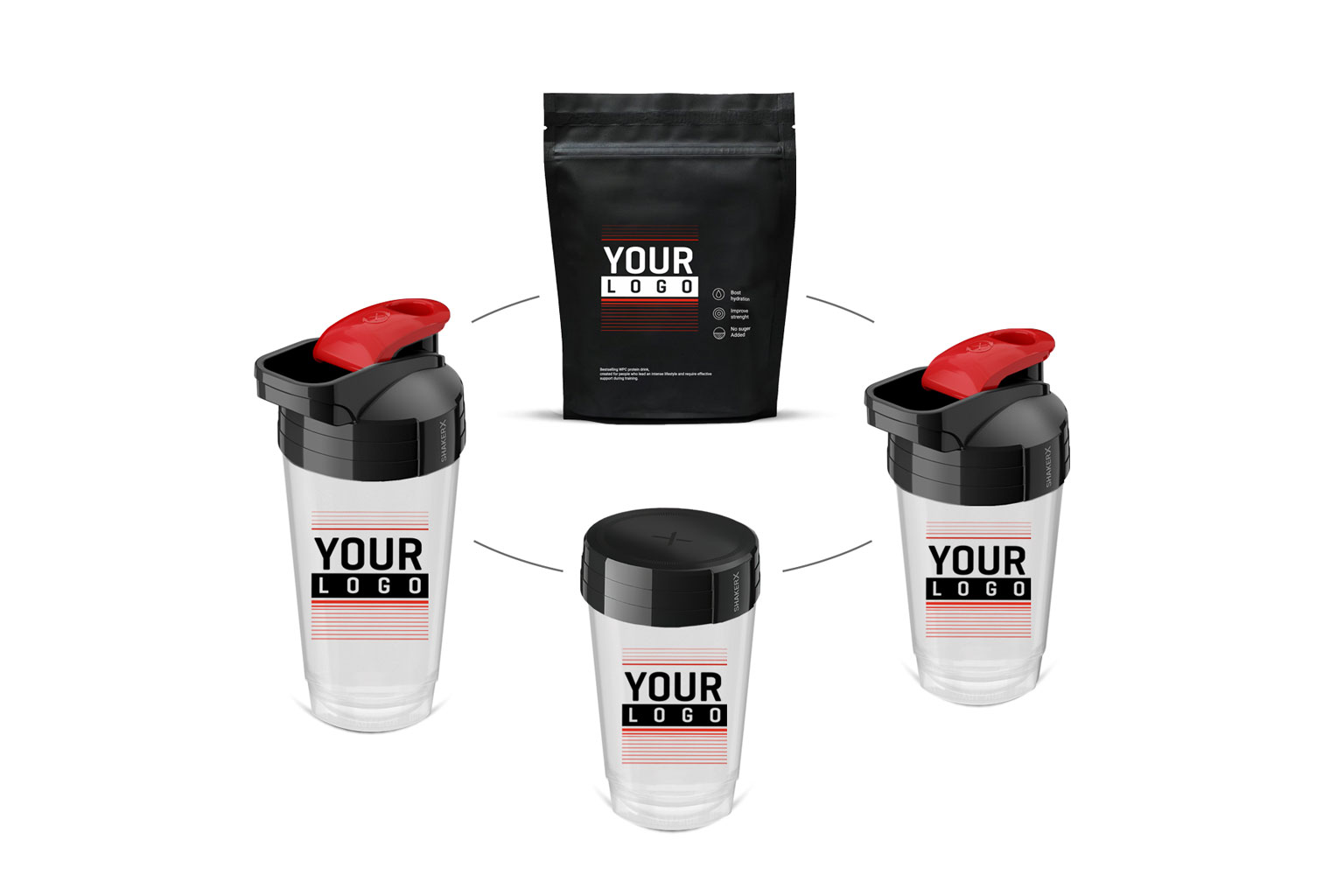
After training, the hand reaches for a shaker with the club crest. The rest of the locker room sees it, and the logo goes out with the athlete into the city,
to work and to the next practice. This is how a shaker works as a club gadget: it doesn’t end up in a drawer after a week, but lives together with the user.
This guide leads through the entire ordering process and is intended for sports clubs or event companies.
Capacity selection, printing, minimum quantities, and a schedule that is realistically met before the start of the season.
What will you find in the article?
- Why a shaker specifically?
- Capacity: what to choose for the team and participants
- Printing: full circumference without extra charge for the surface area
- Material and documentation
- Leak-proofness and daily use
- MOQ and quantity planning
- Schedule: how to make it in time for the season
- What to include in the inquiry
- Summary
Why a shaker specifically
Most event gadgets have a short life. A conference mug ends up in a drawer, a flyer in the trash at the reception exit, a lanyard in a box with the rest. A shaker ends up on the counter, in a bag, and at training — often several times a day.
It is a practical tool that naturally exposes the logo in a sports environment, and incidentally in the office or at university. The athlete drinks from it at the gym, on the pitch, and in the park, so the brand gains exposure among many people without incurring further costs. Every training session becomes a touchpoint with your brand.
However, this works both ways. A leaking cap or fading print builds equally lasting associations — only completely different from those intended. The participant will remember wet things in their bag, not your logo.
Capacity: what to choose for the team and participants
We offer two capacities and both support the full range of customization.
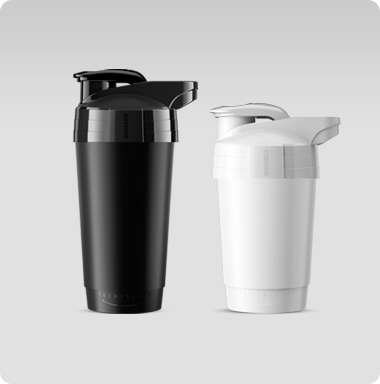
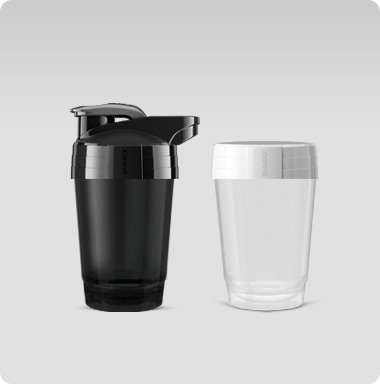
400 ml – works well for lighter portions and shorter sessions, in a kit bag and in the competition zone. It is compact, lightweight, and cheaper per unit — a good choice for larger quantities and mass events where the shaker is primarily meant to be a highly visible gadget of the day.
700 ml – is chosen by people who need larger amounts of fluids or a more elaborate shake with additives. It gives more space for graphics and is more versatile in daily use — participants are more likely to reach for it at the gym than the smaller variant.
Practical rule: if the shaker is only to be a gadget for the event day, the smaller format is enough. If it is to accompany the participant for weeks after the event and work for the organizer’s brand — 700 ml is a better choice.
Both capacities are in one product line, which facilitates consistent branding. Our 2in1 product, meaning two-in-one, also acts as a leak-proof meal container (ContainerX), so the club can expand its offer with a practical accessory with the same design.
Printing: full circumference without extra charge for the surface area
Single-sided printing might seem cheaper, but it is only visible from one side – which is why it can be less effective in motion.
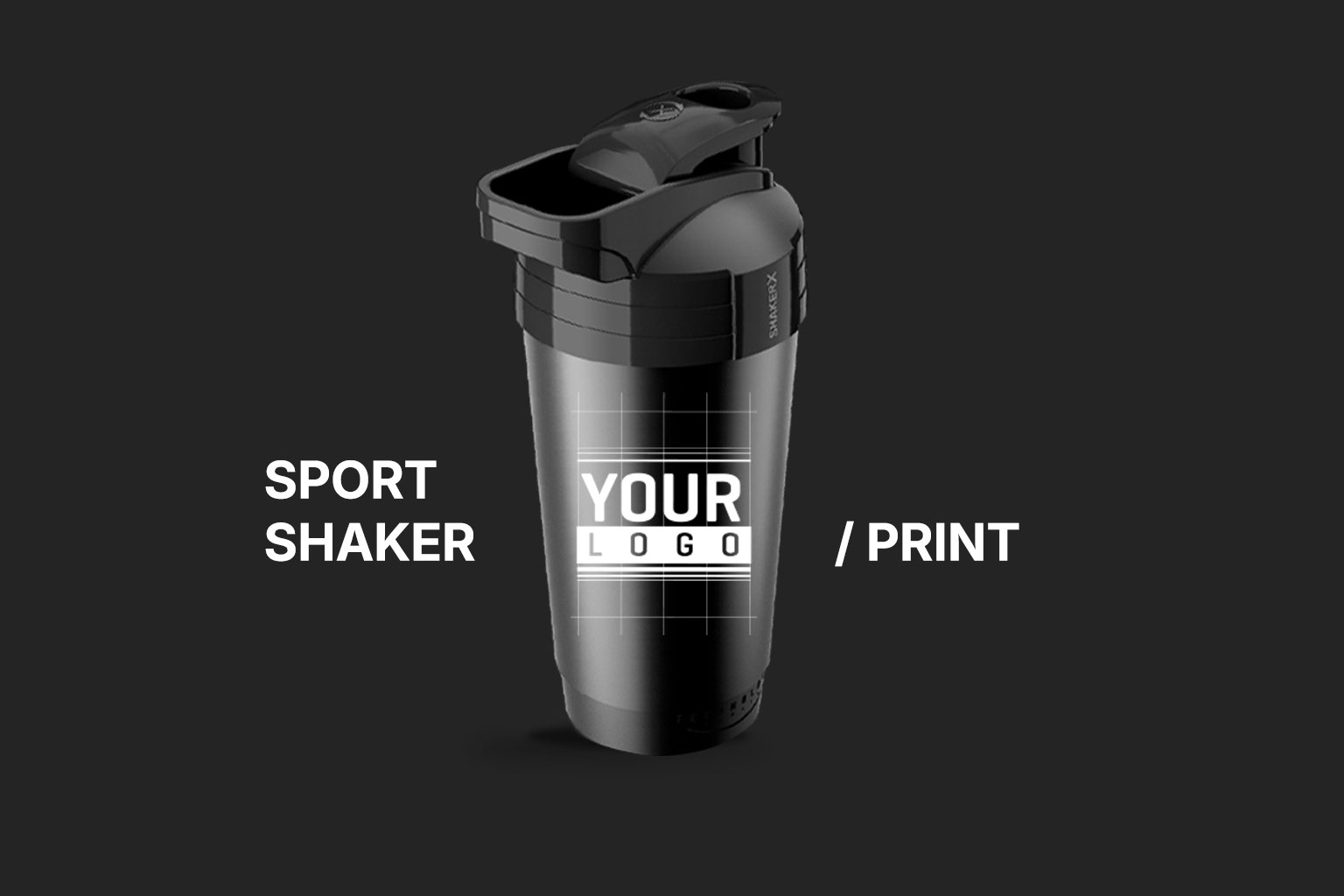
Full 360° print: wraps around the entire container and gives much more space for visual identity, a slogan, section number, or club partner logos. Imagine a shaker left on a bench in the locker room: with full coverage, your logo is seen by every person entering the room, regardless of how the product is lying. With single-sided printing, a significant portion of these eye contacts is lost.
What is important for the club budget: with us, the price of the print depends solely on the number of colors, not the size of the graphic. The full circumference costs exactly the same as a small logo on the side. Each additional color increases the price by a fixed amount.
For the club, this means something concrete: a logo, website address, or QR code can be printed on the entire shaker, and it costs the same as a logo in a narrow strip on the front. There is no reason to leave the surface empty.
Practical design tip: on rounded surfaces, contrast is key. Avoid “tone on tone” with dark containers, where outlines can disappear into the background. Simple forms and solid color blocks read clearly even from several meters away — and that is exactly how people see the shaker in the locker room.
Material and documentation
The shaker has direct contact with the drink, so material documentation is a mandatory point — especially when the product ends up in the hands of several hundred participants.
PZH Certificate is a hygienic certificate issued by the National Institute of Public Health, confirming that the material has passed tests for chemical composition and migration of substances into food. Our shakers are produced on plastic with a PZH certificate – we provide the document upon ordering.
With every price inquiry – with us and anywhere else – ask for a copy of the document, not an assurance on the website. The slogan “BPA-free” itself is a manufacturer’s declaration, not a certificate. For an event organizer, a shaker without documentation is a reputational risk that is not worth taking for the sake of saving a few zlotys.
Leak-proofness and daily use
Leak-proofness is an absolute priority for a club and event shaker. A shaker leaking in a bag is the fastest way to associate the brand with a problem.
Check it yourself before ordering a larger batch. Ask for a sample, fill it with water to 70–80%, screw it on, turn it upside down for 60 seconds, and then shake it vigorously in different directions. Also, check the leak-proofness after opening and closing it several times – the cap mechanism usually fails then, not the first time.
Ease of cleaning also matters. A shaker with nooks and crannies that are difficult to clean quickly ends up in a corner. Circle Technology in our shakers – a rounded bottom and smooth inner surface – means that mixing takes place without a strainer and without a ball. Fewer elements mean faster cleaning and no parts that can be lost.
MOQ and quantity planning
Minimum order quantity is one carton: 60 pieces for 400 ml, 56 pieces for 700 ml.
We fulfill orders in multiples of a carton.
For a small club, this is a realistic entry threshold – you don’t have to order hundreds of pieces to check how the product works for the athletes.
When planning the quantity, round up to a full carton instead of adding a percentage buffer. If you have 300 participants, take another full carton beyond that number – the surplus will be useful for VIPs, staff, and to make up for losses.
If your event is cyclical – an annual run, tournament, start of the season — it is worth calculating the order for the whole year instead of placing several small ones. After the first order, it is easy to place a reprint, so save the project parameters and selected colors to speed up subsequent realizations.
Always ask for the total net cost, not just the unit price. The budget also includes production preparation – printing matrix, transport — these items can surprise organizers ordering gadgets for the first time.
Schedule: how to make it in time for the season
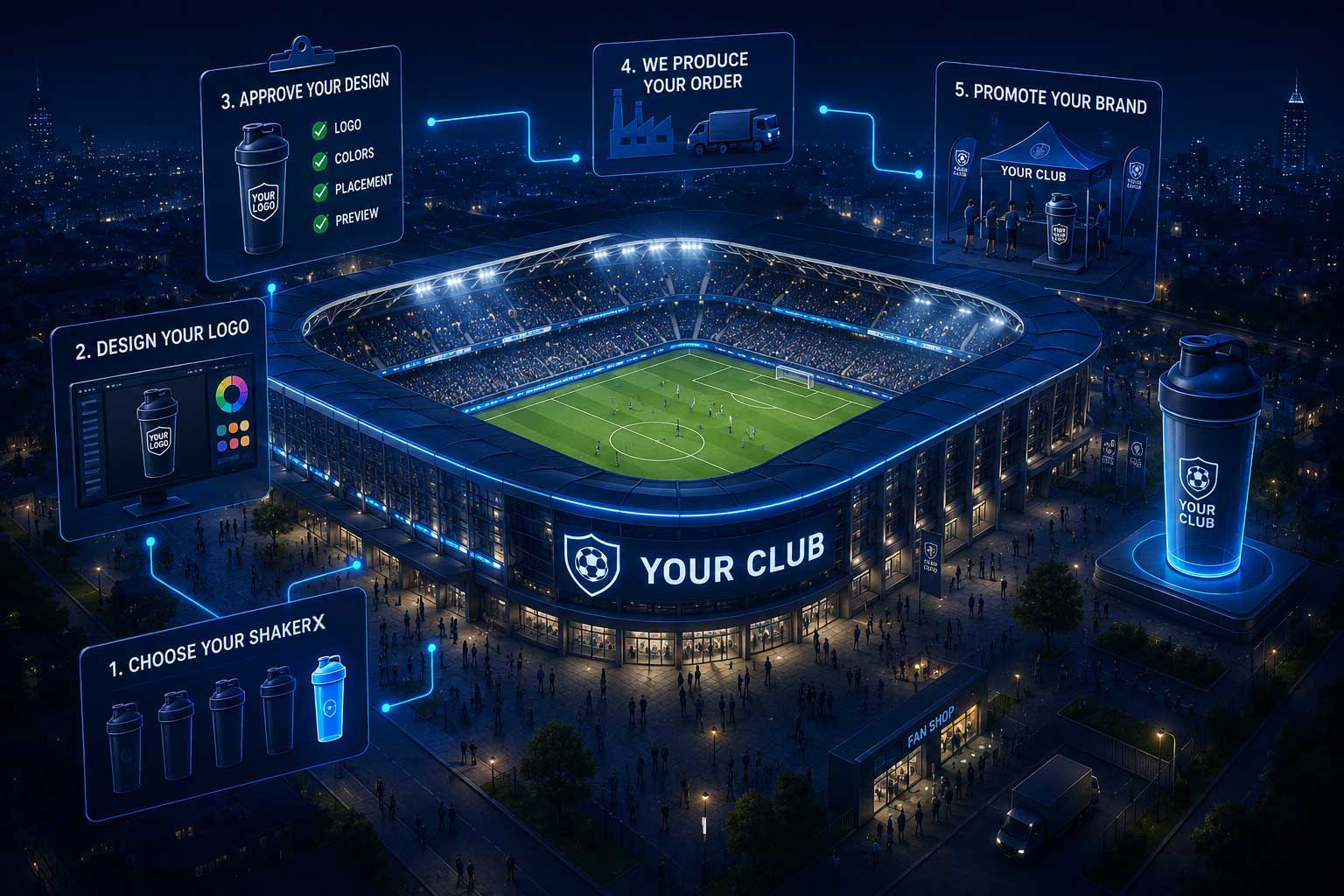
Five stages from brief to delivery:
1. Brief and files – send the logo in vector format, color guidelines, and capacity
2. Visualization – free proof in 24 hours, with cap variants and a preview of the print on the full circumference
3. Acceptance – you approve the project or report corrections
4. Production – from 7 working days from acceptance and payment posting
5. Delivery — courier to the indicated address
Plan your order at least three weeks in advance, before the event date, season start, or campaign for new members. For larger quantities and at the peak of the season, extend this margin to four weeks.
This buffer provides the comfort of corrections and peace of mind that the club shop or reception will be stocked on time. Delays most often do not result from production, but from prolonged project acceptance on the client’s side.
Practical advice: count back from the competition date and set a specific deadline for contact with the supplier — preferably as a task in your calendar, not as a point on a “to-do” list.
What to include in the inquiry
A complete brief saves time for both parties:
- capacity (400 ml or 700 ml) and preferred cap color
- number of print colors
- quantity — preferably in two variants, rounded to full cartons
- specific event date, not “as soon as possible”
- graphic file in vector format (AI, EPS, PDF) or information that it requires preparation
- question about material documentation and a sample
The most common mistake by organizers is sending a logo in PNG with low resolution with the expectation of a clear print.
This simply will not work – a vector eliminates this problem immediately.
Summary
A shaker with a club logo is a gadget that really works for the brand: it is used during training and outside of it, so it builds visibility every day.
The key is a few decisions: material with documentation, capacity matched to how long the shaker is to live after the event, full print – which with us does not cost more than a small logo – and an order placed three weeks in advance.